
Wally Cirafesi:
Sensing Jerusalem at the STI: October–November 2025
From 26 October to 20 November 2025, I had the privilege of spending nearly a month at the Swedish Theological Institute (STI) in Jerusalem. This visit came at a particularly fragile moment: the cease-fire in the Gaza war was only a couple of weeks old, and while life in West Jerusalem appeared to continue with its usual rhythms—cafés buzzing, buses trundling along Jaffa Street, students and tourists moving about—the shadow of the conflict was palpable everywhere. Memorials for Israeli fallen and banners urging the government to bring hostages home seemed to occupy every corner, which were constant reminders that the city’s calm was precarious. A short trip to Bethlehem offered a stark contrast: life for Palestinians was already, and is always, challenging under the “normal” circumstances of occupation, and the war had only intensified these difficulties. Increasing settler encroachments, more economic strain, and the ever-present tension of military occupation layered the everyday with additional hardship. Jerusalem, and its surrounding regions, are places heavy with history, memory, and ongoing conflict; even as an outsider, one cannot help but feel that weight. This month, that heaviness was sharper than usual.
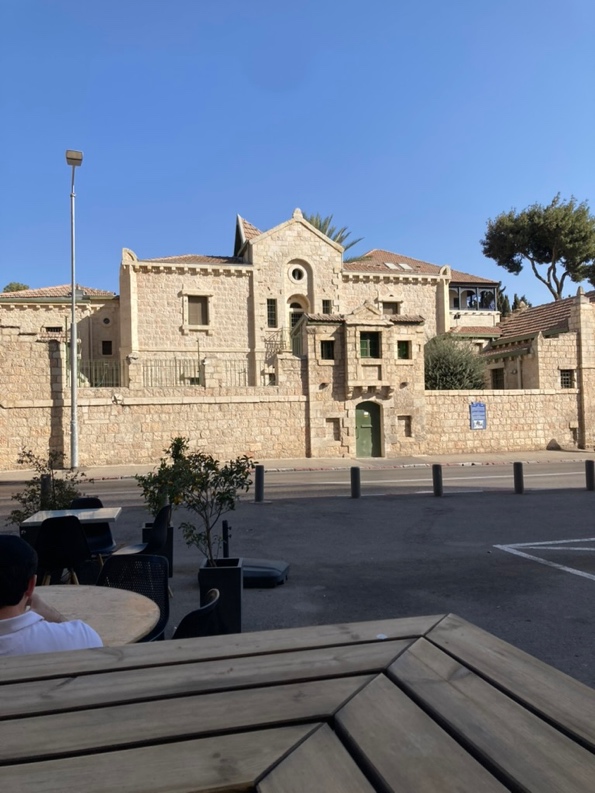
Despite these tensions, the STI proved to be a remarkable haven. While I have been to Jerusalem many times, I had never stayed at the STI before. The staff—led by director Anna Hjälm—were extremely welcoming and made settling in effortless. The building itself is beautiful, elegantly combining historical charm with modern renovations, and its location is superb: just a short walk from Jaffa Street, one of the city’s main arteries leading directly to the Old City. During my stay, I lived in one of the older rooms, conveniently located beside and just below the institute’s library. The library was not fully operational––its main floor was being used primarily as a storage area—but the upstairs area was a quiet space, perfect for late-night reading and writing. It also has a window with a great view to date palm that occupies the central courtyard of the institute. The recently renovated rooms in other parts of the institute looked wonderful as well.
The weather throughout my visit was exceptional. Daily temperatures hovered in the low 20s, with bright sunshine that poured over the city’s stone streets. The climate was ideal for the work I had come to Jerusalem to do, providing not only physical comfort but a mental clarity that is sometimes hard to find amid colder or gloomier conditions like November in southern Sweden.
Two primary objectives occupied my time at the STI. First, I was to prepare and deliver an hour-long lecture at the Tantur Ecumenical Institute, which Anna kindly organized. The Tantur is a unique international centre for theological study located just outside of Jerusalem off Hebron Road. It is a Catholic institution associated with the University of Notre Dame (South Bend, USA), and it is run by an amazing staff: Fr “JP” John Paul (rector), Nizar Halloun (program director), and Sr Marie-Farouza Maximos (program office coordinator). The lecture focused on my recent book, Capernaum: Jews and Christians in the Ancient Village from the Time of Jesus to the Rise of Islam. It drew a diverse crowd of about 20 people—mostly academics, clergy, and tour guides—who insightfully engaged with the contents of the book, which mainly deals with the early history of Jewish – Christian relations. With its long-standing commitment to interfaith dialogue and academic exchange, the Tantur provided an excellent forum for discussion.
My time at the Tantur also provided the context for a couple other serendipitous encounters. Rev. Dr. Donald Binder (St. George’s Cathedral, East Jerusalem), whom I knew previously only from his scholarly work on ancient synagogues, attended the lecture. It was pleasure to meet him and talk about ways we might collaborate in the future.
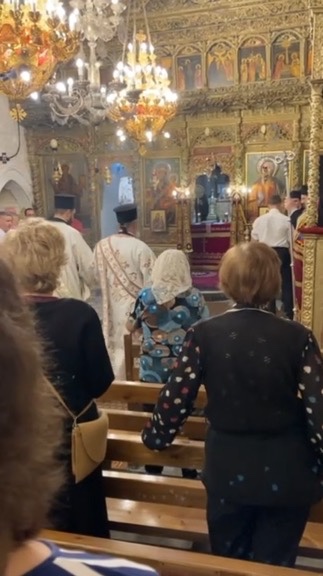
My Tantur experience also allowed me to run into a good friend of mine, Dr. Michael Azar, who is both a Greek Orthodox priest and professor of theological studies at the University of Scranton (Pennsylvania, USA). Michael came to Lund for a workshop I organized in September 2024 and will be coming back again in June 2026. Our work on early Jewish – Christian relations and the Gospel of John is what has brought us together. He invited me to a vespers service, which I had never attended before, and which was one of the highlights of my trip.
Networking for the development of a new project was the second major focus of my visit. A central strand of my research these days centers on the cultural history of the senses, and, more specifically, how the five Aristotelian senses and beyond were activated and given meaning within the religious traditions of Late Antiquity, particularly Judaism, Christianity, and Islam. My hope is that this sensory perspective allows for a more nuanced and embodied understanding of inter-religious relations during this period. As part of this networking effort, I was fortunate to meet with several scholars, who are also good friends, including professors Zeev Weiss, Rina Talgam, and Uzi Leibner at the Hebrew University of Jerusalem, and professor Michal Bar-Asher Siegal at Ben Gurion University of the Negev. I also had dinner with some new friends at the W.F. Albright Institute for Archaeological Research, including the new(ish) director of the institute, Dr. Jamie Fraser. Jamie is doing phenomenal work for the Albright in developing its intellectual culture as well as its financial viability during a time when the US government is making life for the Humanities extremely difficult. I hope to get back to the Albright soon. In any case, we discussed potential collaborative projects, methodological approaches, and sources that could enrich my ongoing research.
In addition, I spent significant time at the Israel Museum, looking at objects related to ancient practices of sensoriality. To my delight, the Museum had recently curated an exhibition on the materiality of light in Judaism, Christianity, and Islam—a resource that proved extraordinarily relevant for my work. These encounters, both formal and informal, reinforced my sense that Jerusalem, while always tricky to navigate on so many fronts, remains a special place for my scholarly work and development.
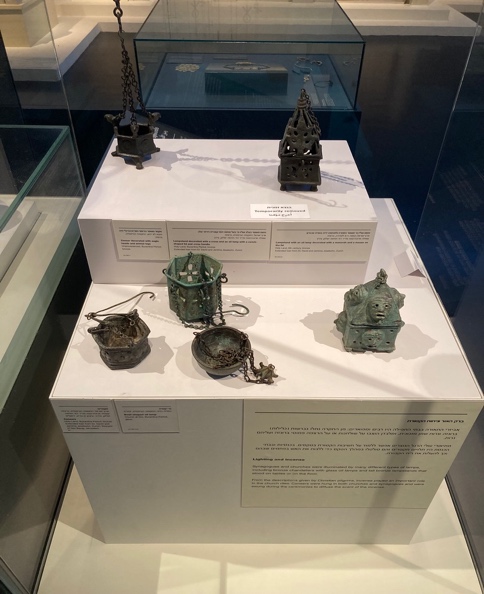
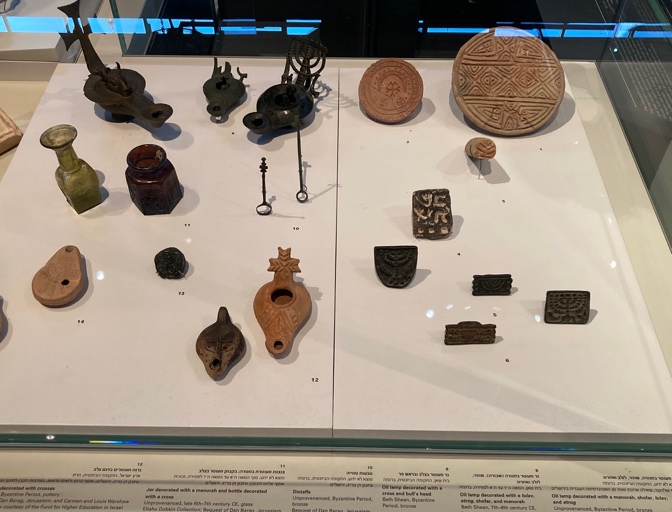
Jewish and Christian Lamps
Incense burners
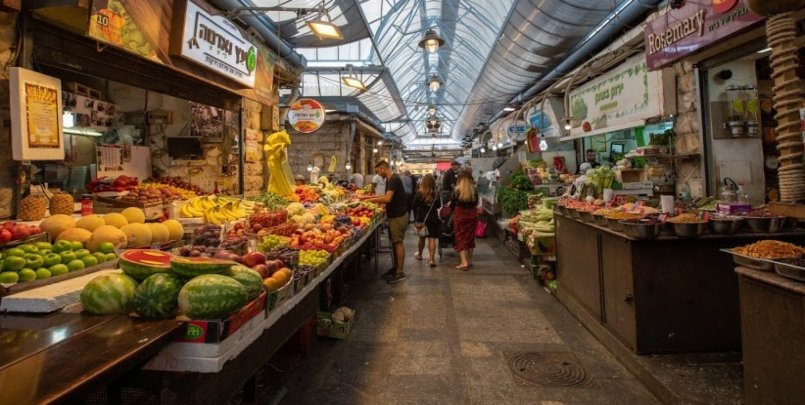
Jerusalem, of course, is not merely a site for academic work—it is a city that overwhelms the senses. Walking its streets, one is confronted with an extraordinary mixture of smells, sounds, textures, and colours: the call to prayer echoing from minarets, church bells tolling, the scent of spices from stalls at “The Shuk” (marketplace at Machane Yehuda), the heat of the sun on limestone walls, and the constant hum of movement and negotiation in a densely layered urban space. The city itself becomes a kind of fieldwork, especially for someone invested in studying the role of the senses in religious life. Every step, every encounter, every market or street corner offers insight into how humans inhabit space deemed “sacred,” how rituals are performed, and how sensory experiences shape the contours of religious identity and community. In this sense, Jerusalem is not just a backdrop for study—it is an active participant, a living laboratory for exploring the questions that animate my research.
Reflecting on my month at the Swedish Theological Institute, I was struck once again how intertwined the scholarly and the experiential are in a city like Jerusalem. The fragility of the cease-fire, the heavy reminders of loss, and the ongoing difficulties faced by local communities lend an urgency to academic engagement: research is never abstract here, never divorced from the realities of life, history, and politics. Yet amid this complexity, spaces like the STI, as well as the Tantur and the Albright, offer moments of reflection, if not reprieve. They remind us that scholarship, particularly when it engages with history, religion, and human experience, is an embodied endeavour—one that thrives on place, encounter, and the subtle interplay of the senses.
