
Cailin Kwoh:
It’s been over two years since October 7th, 2023, and to say that the news about Gaza has been devastating does not begin to express what the last two years have brought to Gaza and the region in general.
I was slightly nervous to travel to a place so fraught with tension and a place that makes the news every day. However, as this is a place that I have been dreaming of visiting for many years, and when I had the opportunity to stay at the lovely STI, it was not an opportunity that I could pass up. So, my partner and I packed our bags and off I went to Jordan. From there we traveled via the Allenby/King Hussein Bridge from outside Amman to Jerusalem, a journey which could have taken most of a day, but luckily for us only took a few hours. We were then greeted at the STI by Anna and all the lovely staff, who happened to be having fika when we arrived.
We spent the whole first day in wonder of just being here. It was hard to reconcile reading the news of the Middle East and Jerusalem, which had just made the news for a shooting a week or so prior to our trip. Yet we sat downtown having a coffee on a bustling shopping street filled with a diversity of people. This felt very much at odds with what I had been expecting and came as a surprise, but as I would soon discover, this is a city full of surprises and contradictions.
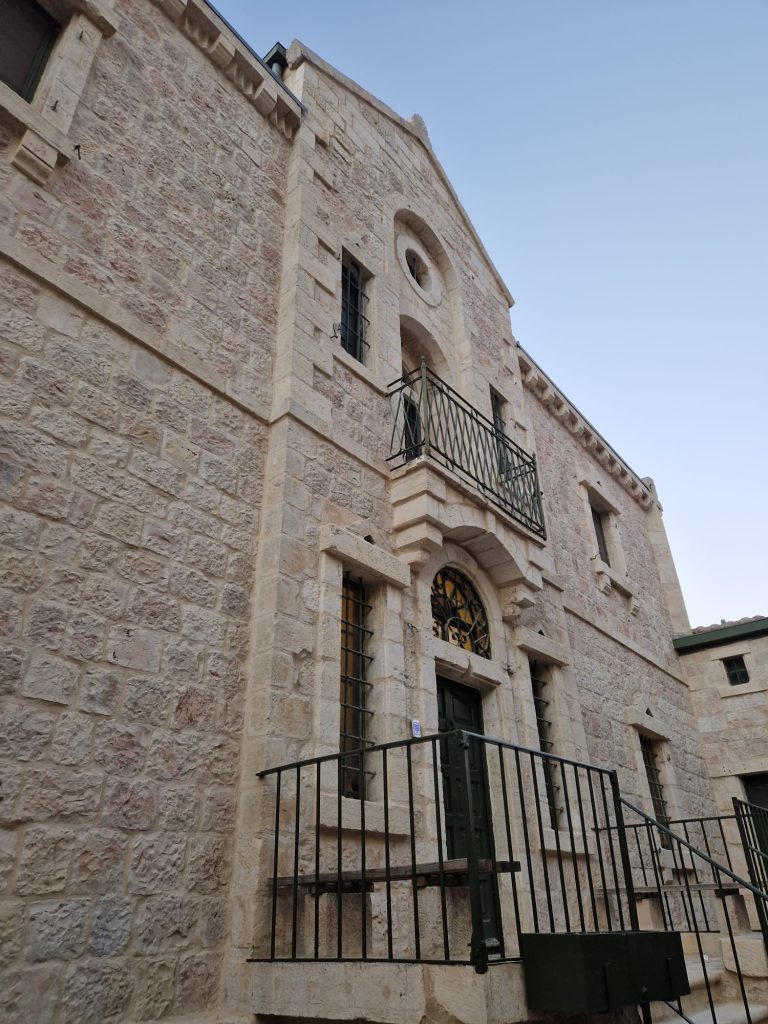
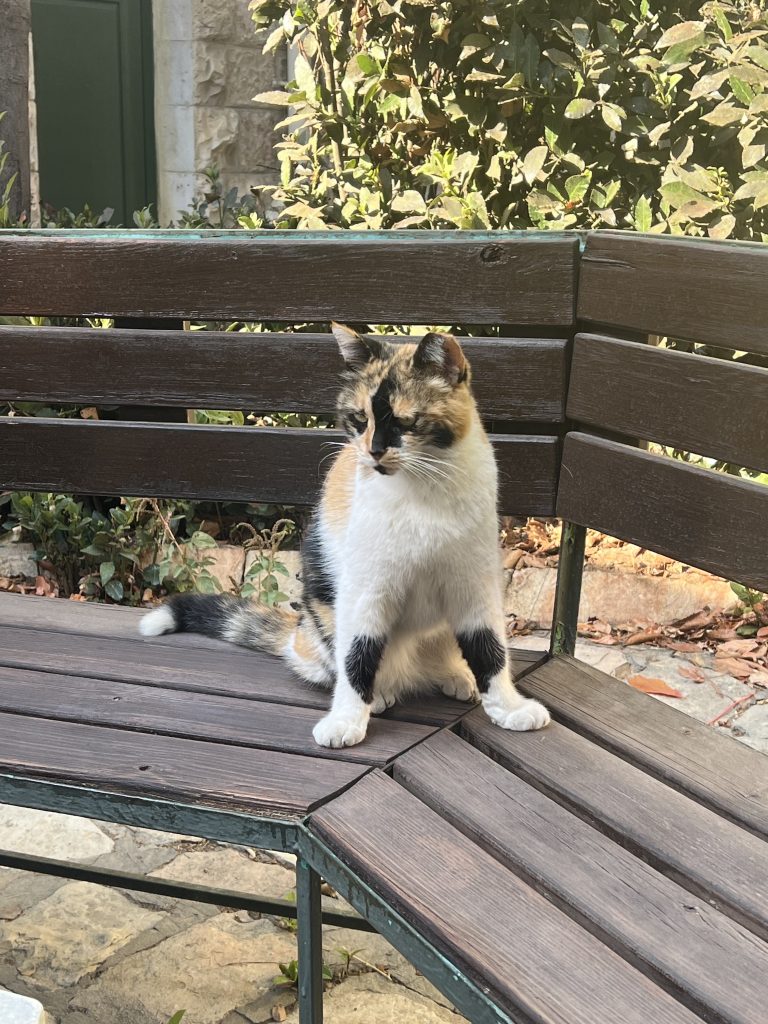
We had the privilege of staying in the STI itself, where there are many rooms and a kitchen for use. We also enjoyed shopping in the local markets and cooking at the STI many evenings. We spent many an hour sitting in the garden and working with the good company of Bissa, the STI cat, who came to be our constant companion when we were on the grounds of the STI. It is a wonderfully situated building in West Jerusalem, with easy access to the Old City and a building full of history. A calm space in the middle of a busy city. Sitting in the peaceful STI, you would never know that once you step outside the door, the busy streets will be rushing around you. It offered us a quiet respite from the busy city and a place of solitude from my fieldwork, which at times can be overwhelming—an oasis, if you will.
I went to Jerusalem as part of my PhD fieldwork with the goal to be out and about in the city and further afield. To meet with women who make thobs (Palestinian heritage dresses), collectors, and archivists, and to make connections for further research.
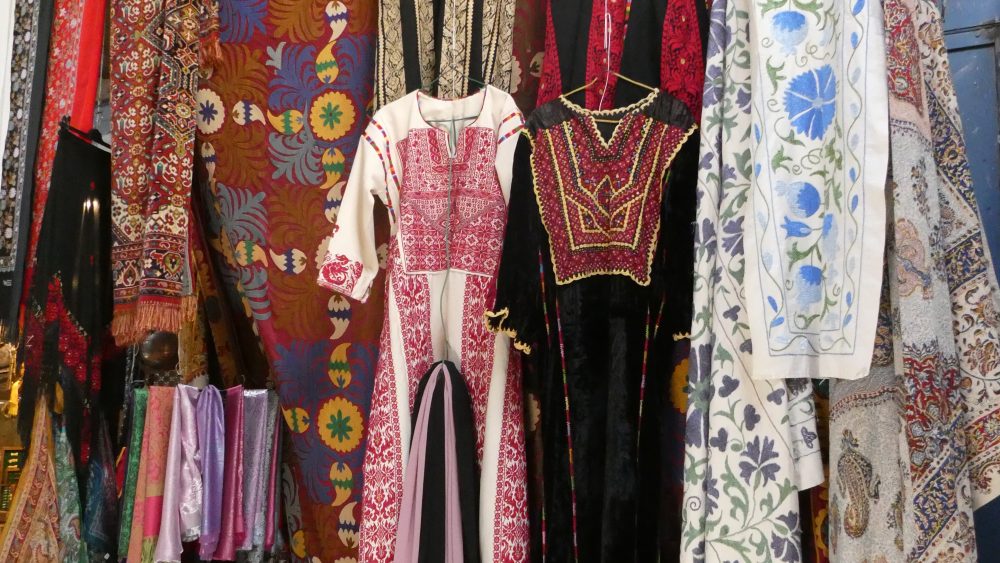
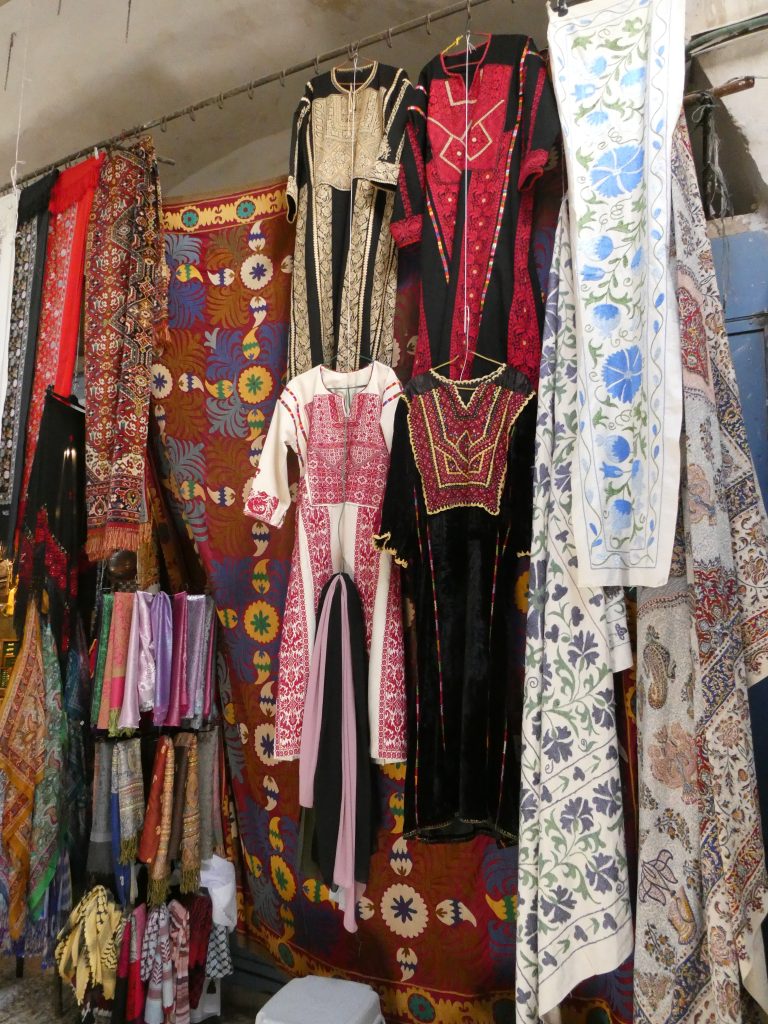
Wandering the streets of the Old City is always an adventure, and there are many old thobs, parts of old thobs, and hand-made tatreez hanging outside shops. Seeing these always causes me to end up inside the shop talking to the proprietor, asking questions about where he got his items and explaining my research. This not only led to many connections but also endless cups of coffee – who needs sleep when you are always fed Arabic coffee and dates? It often felt like I would never sleep again.
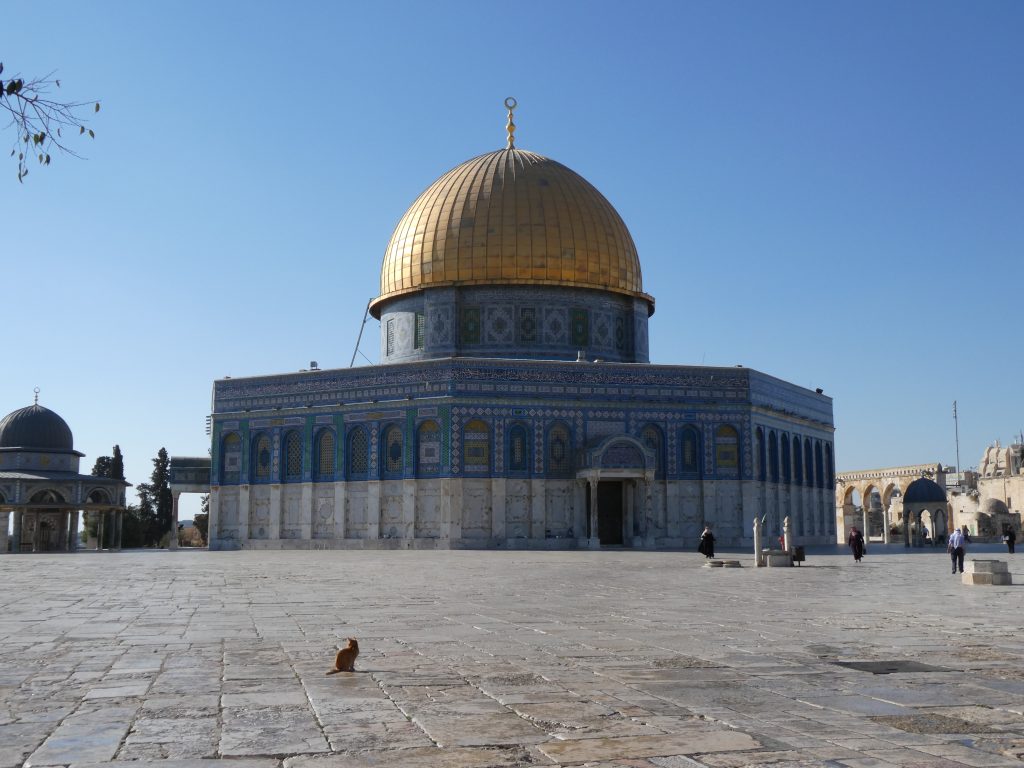
Through connections from before and ones I made in our many wanderings, I was able to visit many private collections in Jerusalem and in Bethlehem. Bethlehem is just a short bus ride away from Jerusalem and, at least for the trips that we took, was very easy to access. I constantly overestimated the amount of time that it would take to travel there. The city is very nice, and we were able to go to the Church of the Nativity and to visit the campus of Bethlehem University. As we wandered around, you could clearly tell that there had been no tourists there in a very long time. However, the first trip we made to Bethlehem was on the day of the signing of a so-called ceasefire, and people were very happy and hopeful on that day.
Discussions and stories were many, both a more formal setup and interview and the spontaneous wander into a store that would lead to hours of conversation and hearing the many stories of not only the person I was talking to but talking through thobs and stories of the thobs, as each one is unique. While we may no longer be able to uncover the exact meaning of the person who made it, as they are no longer present to tell their stories, but we can hear from new stories, from how they were acquired to how the new owner has made use of them. Paths change and things are remade. While the use and meaning of thobs may change, their lives live on and continue to make meaning in various ways.
During a dinner hosted by the STI, Anna told us about the concept of Jerusalem Syndrome, where you will always wish to return to this city, which I can say I have most definitely fallen victim to and am already plotting my return.
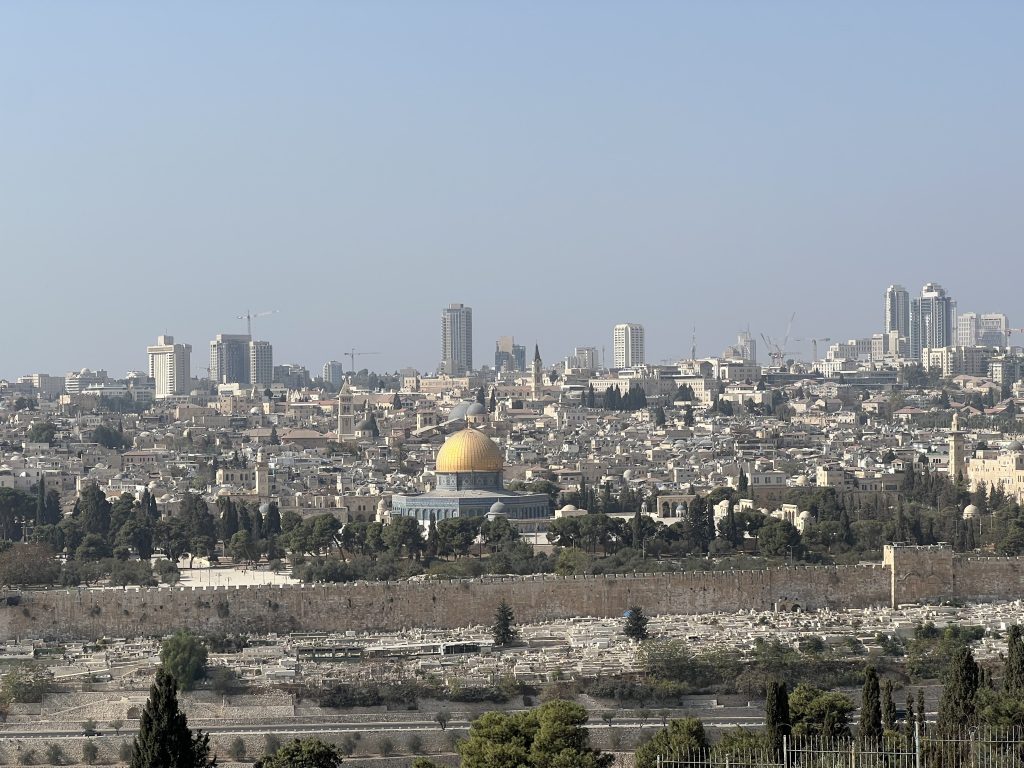
It is not always easy to understand the complexities of a place from very far away, only following the news, and Jerusalem is a very complicated place. I would not have been able to gain such a nuanced understanding of Jerusalem without visiting and without staying at the STI.
While there was not much activity at the STI during my stay there, an effect of the situation in Gaza, I was privileged to meet people that we would not have otherwise met if we had not been staying at the STI, as Anna knows and makes sure that a diverse set of people are welcomed and come to the STI. This gave me a renewed chance to meet an even more diverse set of people than I would have been exposed to even while being in Jerusalem, and I am eternally grateful for the opportunity.
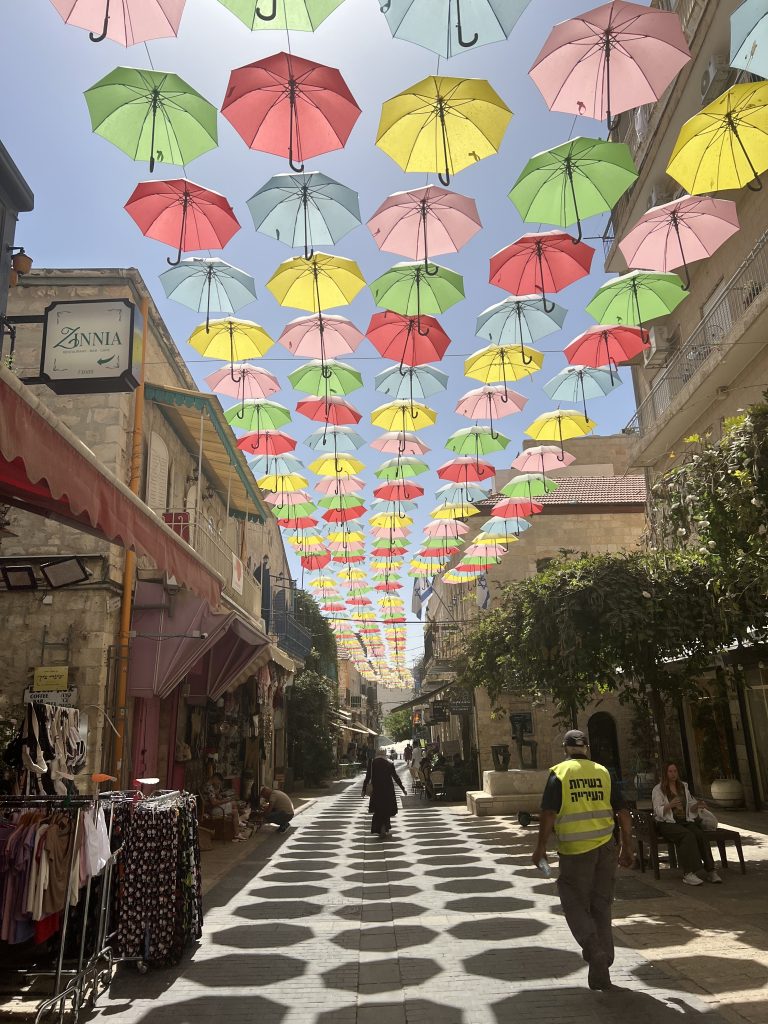
As I have mentioned previously, this for me was a city full of surprises and wonderful interactions to witness. While I have yet to explore this further in the academic sense, I was very intrigued by the idea of the “neighbor” – and the everyday lives of people in the city of Jerusalem are like no other. People live side by side despite religious differences, speak together, eat and drink together, and continue to co-exist together and form bonds, even in the face of the political and national rhetoric.
I will share an example that stuck out to me. I would also like to note that while it was a unique experience to me, it would appear to be everyday to the people who were interacting with each other. We were walking in the Old City and I, as usual, saw an old thob and ended up inside a store on a side street of one of the busier streets in the Old City. After a cup of tea and a chat with the owner, I was rifling through pieces of thobs that were on the floor – when a very typically dressed Orthodox Jewish man with his wife and grown son stopped to talk to the shop owner, an older Palestinian man. He greeted the shop owner with a big smile and stopped to chat for a little bit. Our host in the shop had just been in the hospital, and from what I could piece together of their conversation (a mix of Arabic and Hebrew), he was asking about his health and hoped that he was feeling better. From this interaction, it was clear that they walked the streets to their house every day and said hello to the shop owner. Perhaps the man had done it his whole life? Who knows? But it was clearly part of a well-established routine between them.
In an increasingly politicized world and having been in a region that makes the news daily, I wanted to highlight this. While it might seem small or a banal interaction, I felt that it showcased the really complex nature of Jerusalem and showed the often-forgotten nuances of life within the city walls, an experience that you would only be able to have or witness if you walk the streets of the Old City of Jerusalem.
It truly is a city full of surprises like no other.
